
Last week I was on a lovely writers’ retreat in the Lake District, and found some time to take a couple of trips to investigate the beautiful surrounding area. So obviously I had to go see some medieval ruins. The best sort of ruins. And though it was grey and wet and very, very muddy, I made it to the top of Castle Hill to enjoy the gorgeous remains of Kendal Castle.
Twas originally a motte and bailey castle atop the hill, built by Gilbert Fitz Reinford, Lord of Kendal, around 1184 (one of my favourite centuries), as Scotland is quite close by, and they were a bit worried about raids over the border. Gilbert’s son, William, then built the stone castle around 1240. It was never actually attacked, but Robert the Bruce did pop over during the Wars of Independence, and may have devastated the town a bit.
Eventually the castle passed to the Parr family, specifically Catherine Parr’s grandfather, and he apparently made a lot of shiny improvements in the 1400s, but by 1572, it was in ruins.
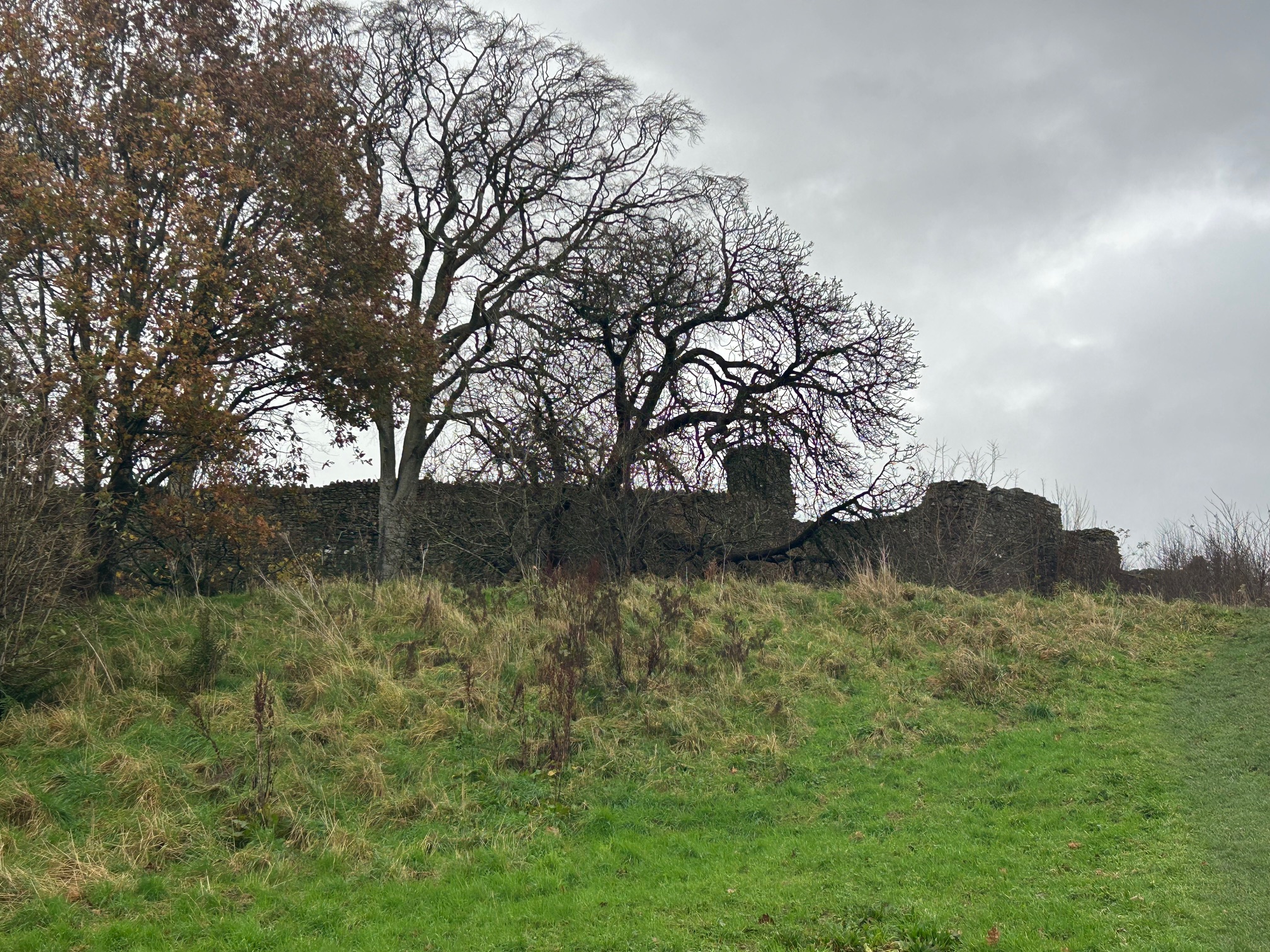
The walk up to the ruins involved a precarious scramble over mulchy leaves which caused, perhaps, a smidgen of slipping and sliding on a steeper-than-I’d-like-in-these-weather-conditions hill. But, lo, I was rewarded with the curtain walls slowly coming into view!
There was a handy sign requesting that visitors do not poke the eight hundred year old walls. So I did not poke the walls.

There’s a path that goes right round the almost circular earthworks, and it was extremely cool as normally I stand in castle ruins looking out, and imagining how scary it’d be to have an army sieging you. This time, looking up at the walls – ruined, yes, but they still felt awfully intimidating – and seeing the massive ditch before them, twas the opposite: I would very much not have wanted to attack this castle in its glory days.
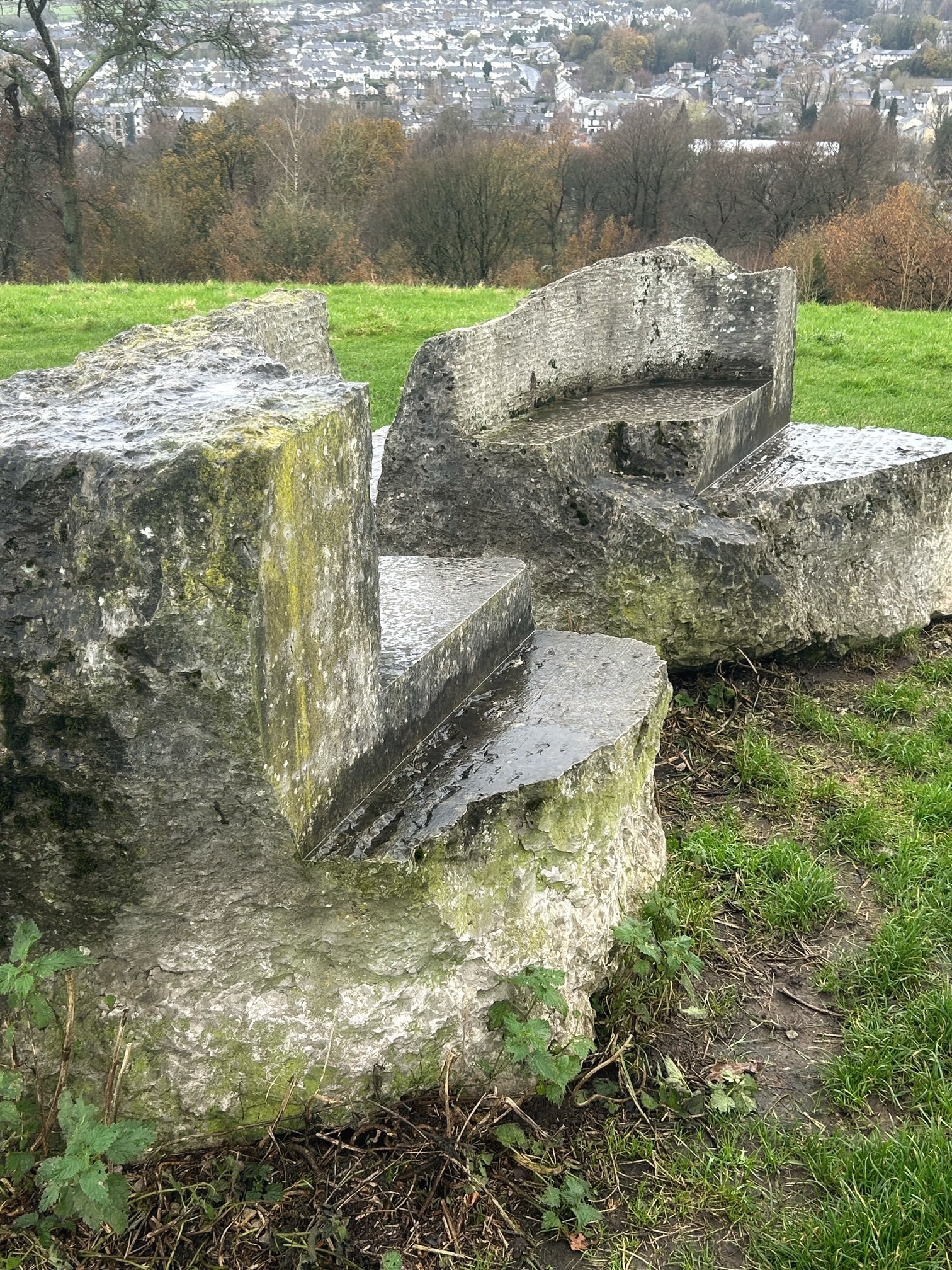
Were there benches up there? I think I saw a bench. But more excitingly there were these sculpture seats designed by Alain Ayers. A little wet to have a sit down when I visited, but I love the shape of them, and the idea of boulders sculpted to fit the landscape and seating needs.
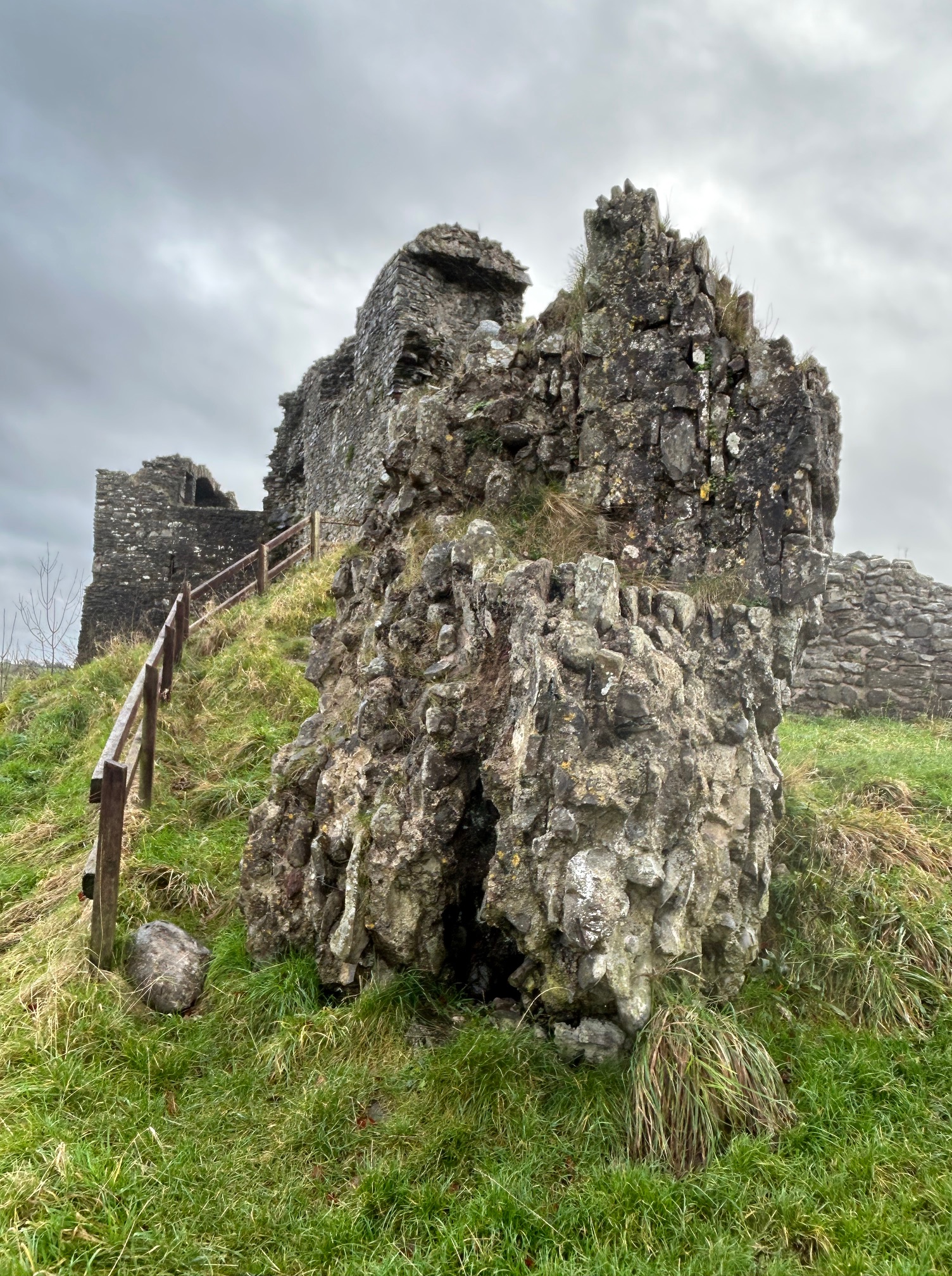
Looking left as I entered through the gatehouse remains. Towering in the background are the remains of the main hall.
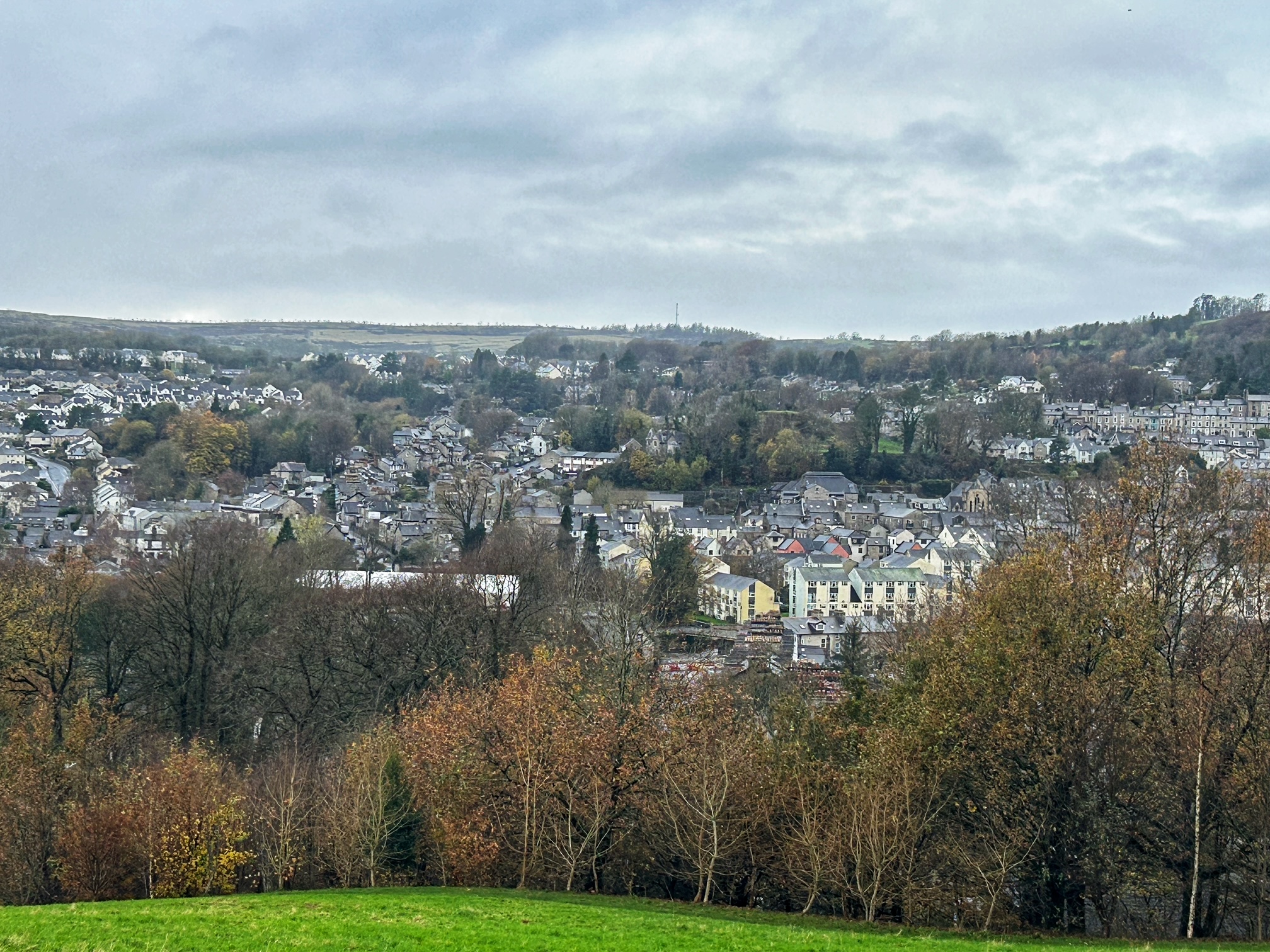
The views were incredible – 360 degrees of Kendal, and then the countryside beyond. I don’t think I’ve ever visited a castle where it’s so painfully obvious why a castle was built there. Even standing at ground level you could see everything, in every direction, for miles.
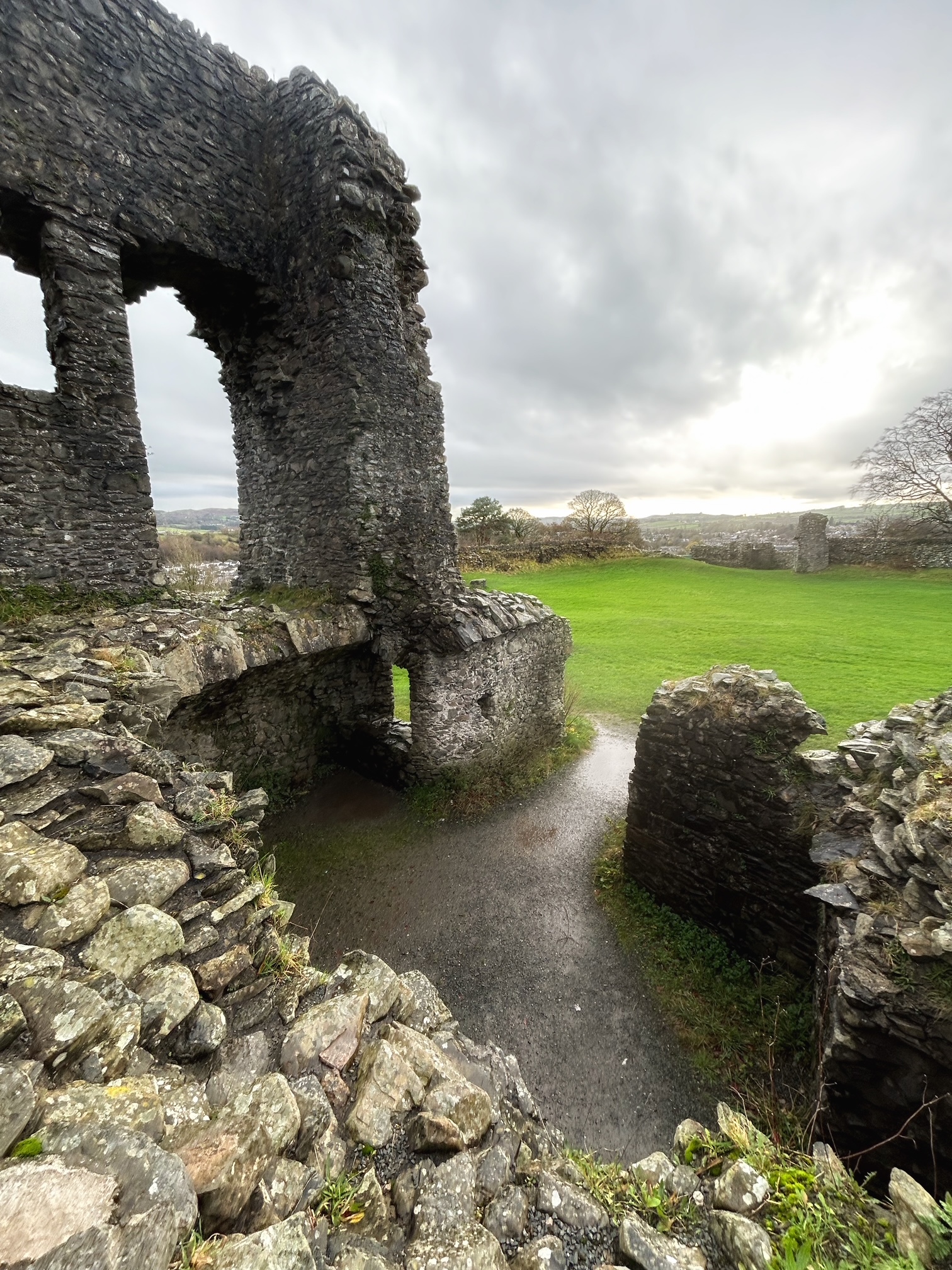
I’m standing on the remains of the main hall’s floor (I think). There were proper metal stairs put in, I’m not clambering over fragile ruins (I say, defensively) – it was only the walls they didn’t want poked. And that’s an epic storage room below, which I did not enter because ghosts.
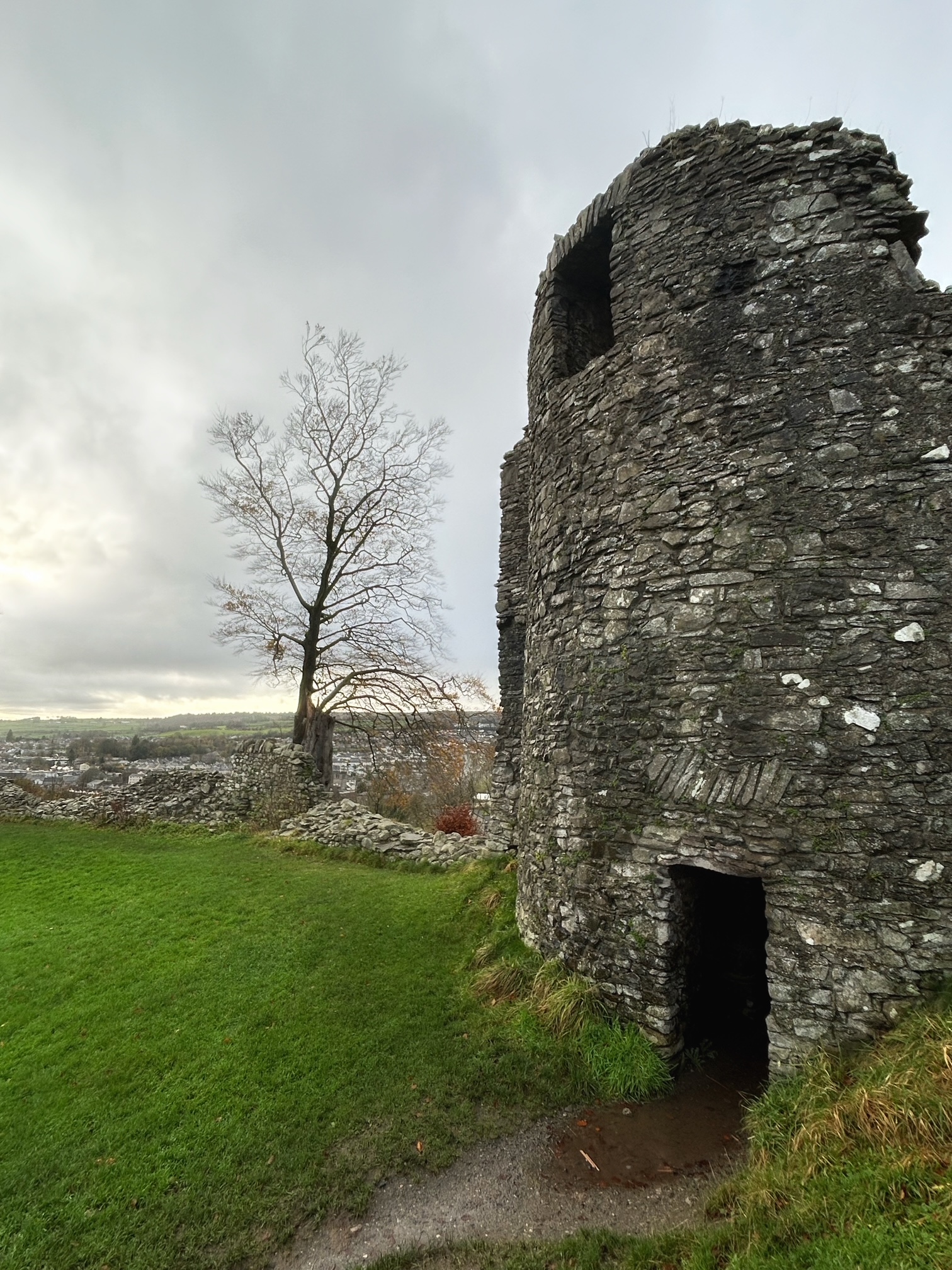
The surviving tower! You could actually go up to the first floor (again, handy metal stairs, no clambering). I did not duck my head in that entrance, however. I’ve seen more than enough horror films to know better.
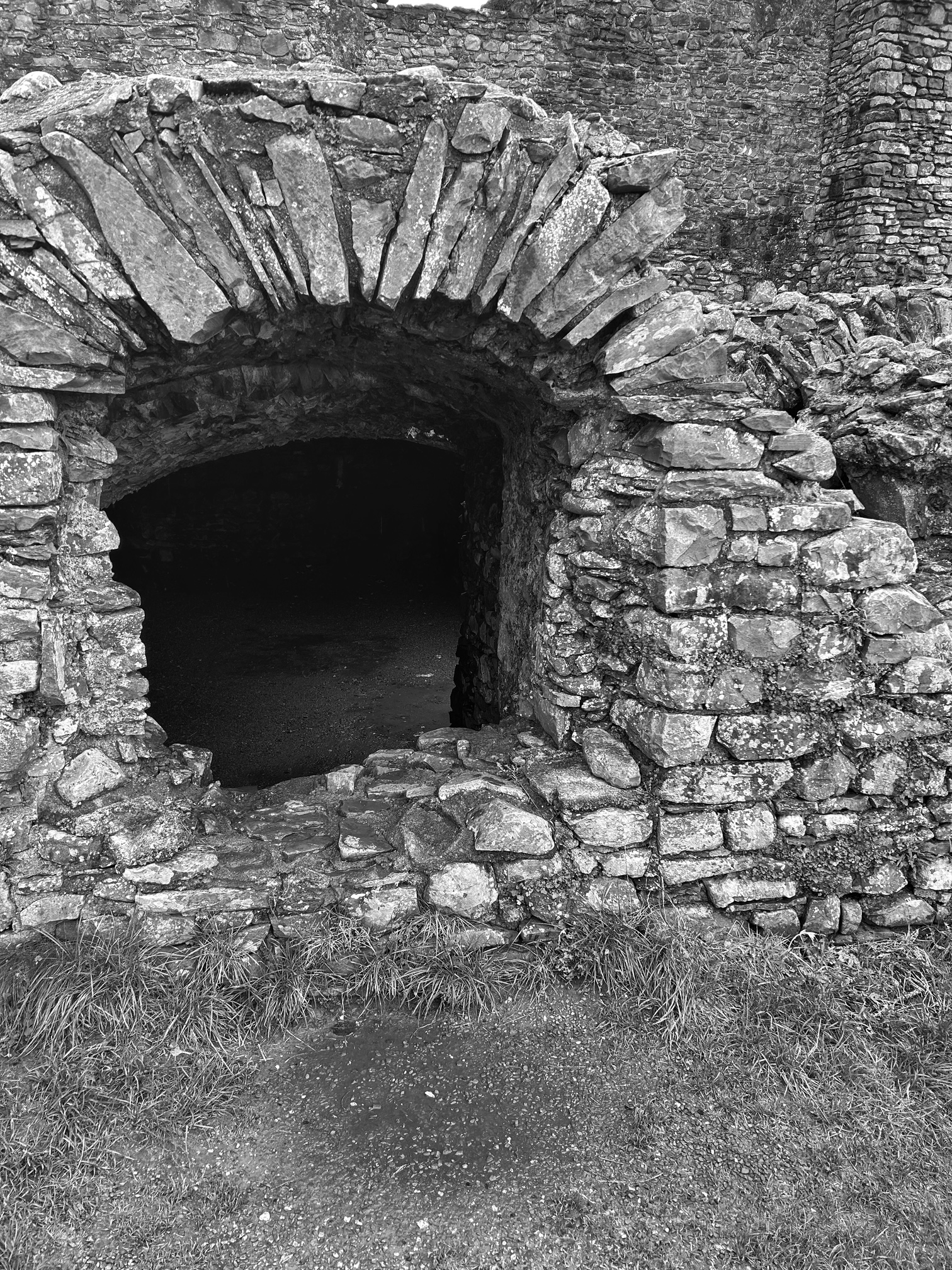
A still shot from my future found footage short film that I’m imagining in my head. I feel like I should have edited it so there’s a subtle impression of a figure in the dark.
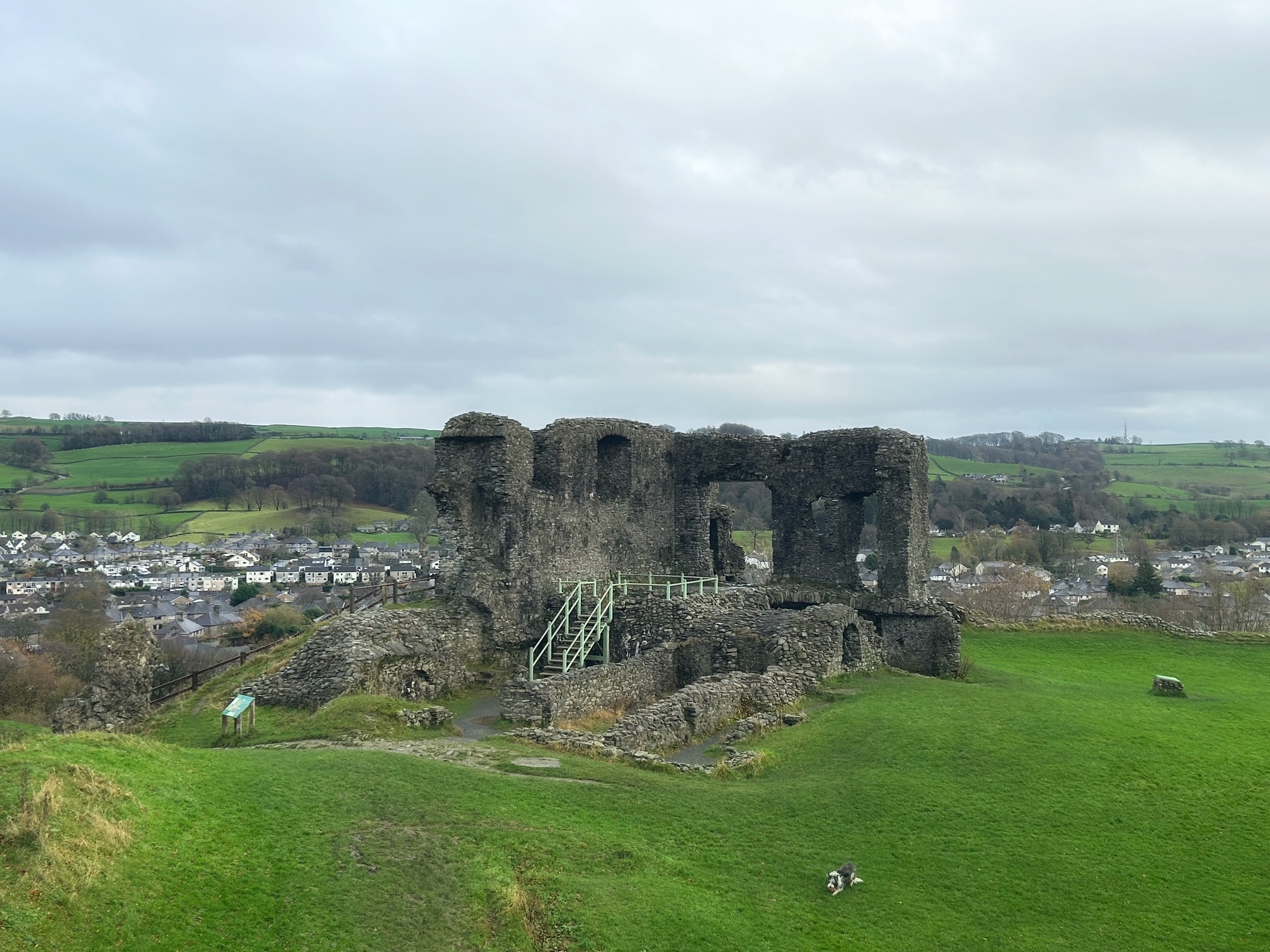
And there she is from an interior angle! I’m standing on the first floor of the surviving tower. I confess I wasn’t expecting much from these ruins, but damn, it was a lovely walk up, and the way the ruins came into view was epic. And getting to circle round the outside before coming round to the gatehouse remains was very cool. Plus the ruins themselves are gorgeous. And those views of Kendal! Which conveniently also had many places with coffee and hot chocolate available since, joyful as this was, it was also absolutely bloody freezing.
It was really satisfying wandering around trying to get good pics of beautiful historical stuff out in the open. And if that’s your sort of thing, a while ago I managed some decent ones of the wreck of the Monreith, a schooner that ran aground in Scotland in 1900.
Discover more from Lizbeth Myles
Subscribe to get the latest posts sent to your email.

 Lizbeth Myles