Way back in 2019 I did a wee talk on the TARDIS Talks academic track at the Gallifrey One convention. It’s a fantastic part of the convention that lets attendees do a deep dive into some aspect of Doctor Who that they’re passionate about. And instead of the more traditional panel structure, you present a talk about ten minutes long.
As someone who has a casual interest in legal history, it seemed a fun idea to take a closer look at what Doctor Who had to say about law on Gallifrey, specifically constitutional and criminal law. And so, a mere six years after I promised Joy Piedmont (one of the brilliant track organisers, along with Paul Booth), I am finally putting the talk online.
Please note, should you find yourself on Gallifrey none of this should be considered legal advice.

“Law doesn’t exist in a political vacuum, but reflects the values and attitudes of the society that created it. Today, I’m going to be talking about The Laws of Rassilon, or Gallifreyan constitutional and criminal law as presented in the classic series of Doctor Who.
Primarily, I’m looking at The War Games, The Deadly Assassin, The Invasion of Time, Arc of Infinity, and The Trial of a Time Lord. These are all stories that either take place on Gallifrey or where the Doctor is put on trial by Time Lords. It seems that every time the Doctor comes into contact with his own people, he gets into legal difficulties.
The primary areas of law we get to see something of onscreen are in the areas of criminal and constitutional law. I’m going to assume everyone is vaguely familiar with what criminal law means. Constitutional law tends to be less well understood. In the broad sense it concerns the structure and powers of the state, and the relationship between the state and the individual. A state’s constitution can be written or unwritten. Most countries in the world have a written constitution. And that document will have a special legal status which puts it above other law.
It’s established in The Deadly Assassin that Gallifrey has a written constitution. “Vapourisation without representation is against the Constitution!” declares the Doctor. It’s obviously not a line that’s really there to elucidate Gallifrey’s legal system. “Taxation without representation is tyranny” became an 18th century slogan of the American colonists unhappy they were paying taxes without having any voice in the British parliament. Here, it’s a joke from writer Robert Holmes, but once established, Gallifrey’s constitution is then referred to and built upon in subsequent stories.

The United Kingdom does not have a written constitution. When we hear that word, most British people’s first thought is of the US constitution. The great advantage of the highest form of law in Britain being an ordinary Act of Parliament, or equivalent, is flexibility, but given Gallifrey is characterised as an ancient and unchanging society (despite televisual evidence to the contrary) it having a more rigid legal structure is apt.
So what’s actually in the Gallifreyan constitution? From the Doctor’s exclamation it can be inferred that there’s some clause against summary execution. There are also at least seventeen substantive clauses: the Doctor invokes Article 17, which gives him the right to offer himself as a candidate for the Presidency of the Time Lords. The constitution also protects all candidates from any interference in presenting their claim, until the election for the office is concluded. Gallifrey wants, at least on paper, free and fair elections.
A second Article is referred to in The Trial of a Time Lord: Article 7. Although not explicitly mentioned a part of the constitution, given its importance, it’s reasonable to assume it is another constitutional clause. Article 7 contains the Gallifreyan definition of genocide, and demands the death penalty for anyone convicted of the crime. It’s a surprising inclusion for a society that prides itself on being a civilised culture. But then, as established in the same story, the Time Lord High Council is also happy to drag planets around the universe, incinerating their surfaces, in order to protect its secrets. This is not a government afraid to indulge in hearty doses of hypocrisy.
There’s further information on the constitution in The Five Doctors. The Castellan of the Chancellery Guard states that “The constitution clearly states that when in emergency session and the members of the inner council are unanimous, the President of the Council may be overruled.” It’s an intriguing addition since it reduces the head of state’s powers in a time of emergency rather, as is more familiar in the real world, increasing them. A sign perhaps of Gallifrey’s interest in reflection and consideration, and ensuring that an emergency situation doesn’t cause any rash action.
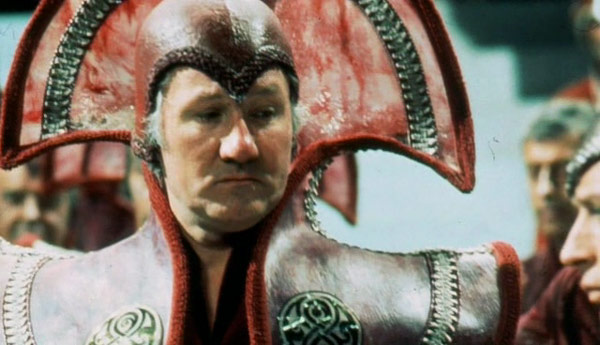
Constitutional law goes beyond the confines of a written constitution. Like the UK, Gallifrey has its share of constitutional conventions, that is rules which are expected to be observed but if they are not they generally do not lead to judicial sanctions. These constitutional conventions are regarded as regular behaviour, the normal way of things, and to not follow them could have very disruptive consequences. For example, the monarch has unlimited power to appoint who she likes as her ministers, however by constitutional convention all ministers are appointed by the Prime Minster. Imagine what would happen if Elizabeth Windsor suddenly decided that Tom Baker was our new Foreign Secretary. I mean, vast improvement, but that’s what we call a constitutional crisis. There’s no legal remedy. We have an excellent example of such a convention in The Deadly Assassin, when Chancellor Goth discusses having to face the decision of pardoning his predecessor’s murderer or breaking with the custom of a new President pardoning all political prisoners. Again, this speaks to Gallifrey’s values: mercy extended to opponents who have broken the law to oppose the High Council. They did not, perhaps, consider the possibility that would include assassination. Perhaps assassination is rare enough, and Time Lord Presidencies long enough, that it’s simply never come up before. It’d be interesting to know if they did consider, or have experiences, with assassinations that result only in a regeneration, and how those are legally addressed.
Gallifrey is clearly a society with a complex, well-developed legal system, but it has some interesting notions regarding the rule of law. The rule of law that has never been a clear-cut concept. Reducing it to “equality before the law” is to make it painfully simplistic. But one aspect of it is that the individual should be protected from the exercise of arbitrary power by the state. And, on the positive side, the Time Lords are very keen on putting the Doctor on trial before punishing him, even in Arc of Infinity they justify their plans to summarily execute him through established precedent, not pure expediency. Alas, when the individual is not a Time Lord, they are much less inclined to care about individual rights. Poor Jamie and Zoe are sent back to their own times and have their memories of their adventures with the Doctor erased. They’re given no choice in this, no opportunity to protest; they are not even told what will happen to them. This may be legal, we don’t know, but any discussion of what the rule of law means should consider not only what powers a government has, but what power a government ought to have, and a convincing moral argument for invading someone’s mind without their consent and erasing their memories would be something of a challenge.
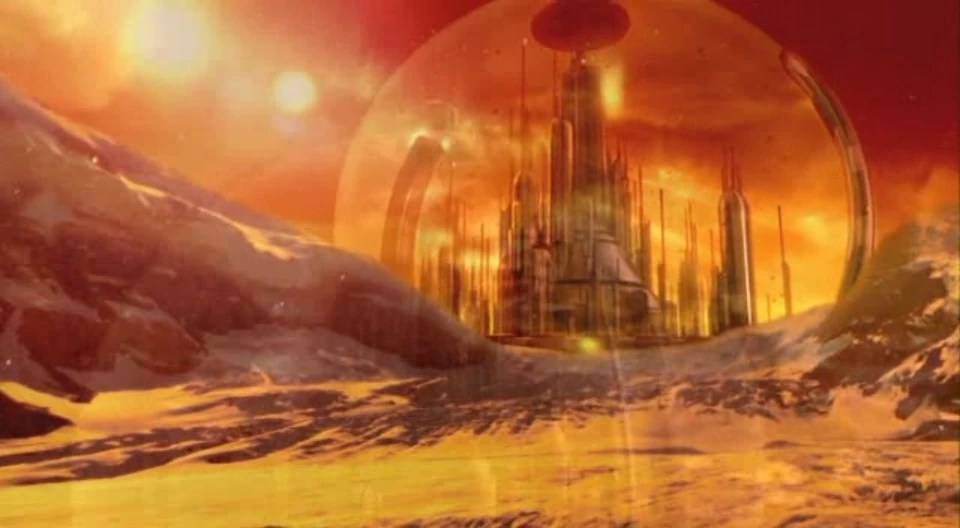
In any system of government that is based on law rather than arbitrary power you’ll find executive, legislative, and judicial functions. In order to prevent tyranny, and for the rule of law to have any meaning, these powers must, to some extent, be separated. At the very least, there must be an independent judiciary.
There’s little sense of how Gallifrey’s legislative operates. It could be assumed that the High Council is roughly equivalent to the Westminster Parliament, indeed it often feels like a sci-fi House of Lords, but there’s only a single line that talks about the actual making of the law. It occurs in The Deadly Assassin when Chancellor Goth decides his first act as President will be to have Cardinal Borusa draft an amendment to Article 17. So, at the very least, the President is able to initiate legislation, and a Cardinal may write it. The process for debate, and amendments and passing the legislation is entirely unknown.
Happily, there’s much more substantive exploration of the executive and judicial functions of government and we know a number of things about the structure of Gallifrey’s governing body, that is the executive function of the state. It’s given several names through the series: the council, the Supreme Council, and most commonly, the High Council. There’s no indication of how its membership is decided, but we know how its leader is chosen. The High Council is led by a Lord President. Under regular circumstances an outgoing President will choose his successor (a process that brings to mind the succession of Roman Emperors, when things didn’t end up in a civil war). If a President dies without naming a successor, an election is called. Candidates do not need to be members of the High Council in order to stand.
In terms of political parties, the Council’s membership is divided into colleges: the Prydonians, the Patrexes, the Arcalians, and others. What each college stands for is unknown, but the distinctions are important enough for Gallifreyans to care which college a President comes from, with the Prydonians have a reputation for deviousness. The presidential inauguration feels more like a coronation than the appointment of a Prime Minister: the Time Lords are dressed in “rarely worn” robes. The Doctor, when made President in The Invason of Time, is adorned with the symbols of state, the Rod of Rassilon and the Sash of Rassilon. The rod itself, and its use – hitting the floor three times – brings to mind the State Opening of Parliament, where we also have a rod. The door of the House of Commons is slammed shut in the face of the Usher of the Black Rod, who then strikes the door three times. It symbolises the Commons’ independence from the Sovereign and dates from when Charles I tried to have Members of Parliament arrested. The words said by the Doctor and the coronation oath of the British monarchs both include promising to uphold the law. The aesthetic of the High Council is something of a mash-up between the House of Lords, the monarchy, and the Oxbridge universities.
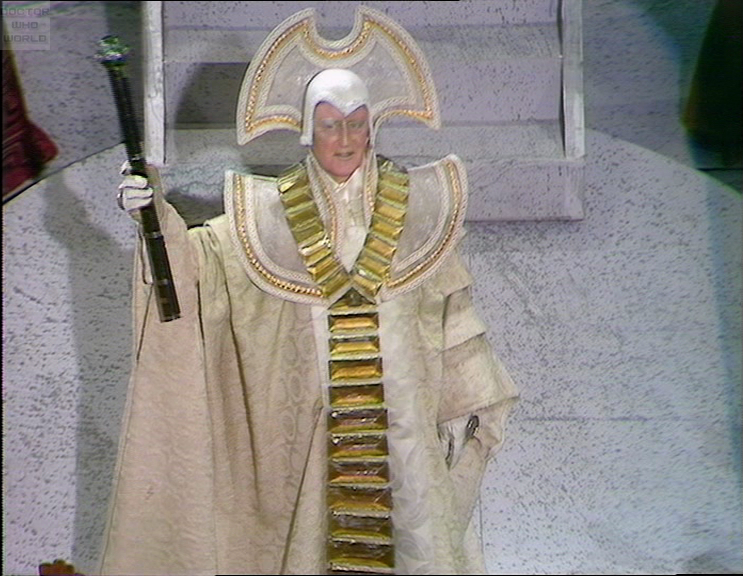
The titles of the two highest ranking members of the High Council seem to come from the Great Officers of State (not to be confused with the Great Offices of State), who arose from the Royal Household to become ministers of state, but their function today is largely ceremonial. The highest, non-defunct rank, is that of the Lord Chancellor. Below them is the Lord President. The Three Doctors manages to be curiously ambiguous about who is actually the highest authority on Gallifrey. One Time Lord is the Chancellor, the other is President of the Council. The President is the one who decides to lift the Doctor from his timestream, over the objections of the Chancellor. However the way they interact – the President’s deference, his frequent use of the “excellency” as a form of address, suggests it is the Chancellor who is actually in charge but lacks the force of personality to take control of the situation. In The Deadly Assassin, the ambiguity is cleared up, and the Lord President is top of the Time Lord hierarchy with the Chancellor as his number two.
The one consistent element in the Doctor’s trials is the dedication Gallifrey has to giving the accused the opportunity to speak. In The War Games they are so insistent on this right, that they torture the War Lord until he makes use of it. In The Deadly Assassin, Trial of a Time Lord, and even in the not a trial but we’re executing you anyway shenanigans of Arc of Infinity, the Doctor is not just permitted, but encouraged to speak, and to justify himself.
The evidence presented in the Gallifreyan trials is either from the Matrix, or from first-hand witnesses. The Time Lords have a touching faith in their eye-witness testimony – going so far as to accept it as a way to rebut the omniscient Matrix records – when it’s actually the most unreliable form of evidence. Perhaps Time Lords have better memories than humans.
There’s a point made in Arc of Infinity by the Lord President that Gallifrey has outlawed the death penalty for many years. In Europe, the death penalty is often used as shorthand for barbaric justice. Membership of the EU requires the abolition of the death penalty, and the only country on the continent to retain it is Belarus. Arc of Infinity’s pointed reference to its abolition, just before the Doctor is sentenced to execution without trial, is used to highlight the seriousness of the situation facing the Time Lords, but it’s also relevant to the real world. Arc was broadcast in 1983; the late seventies/early eighties saw a spate of death penalty abolitions, though most European countries had by this time de facto ended executions.
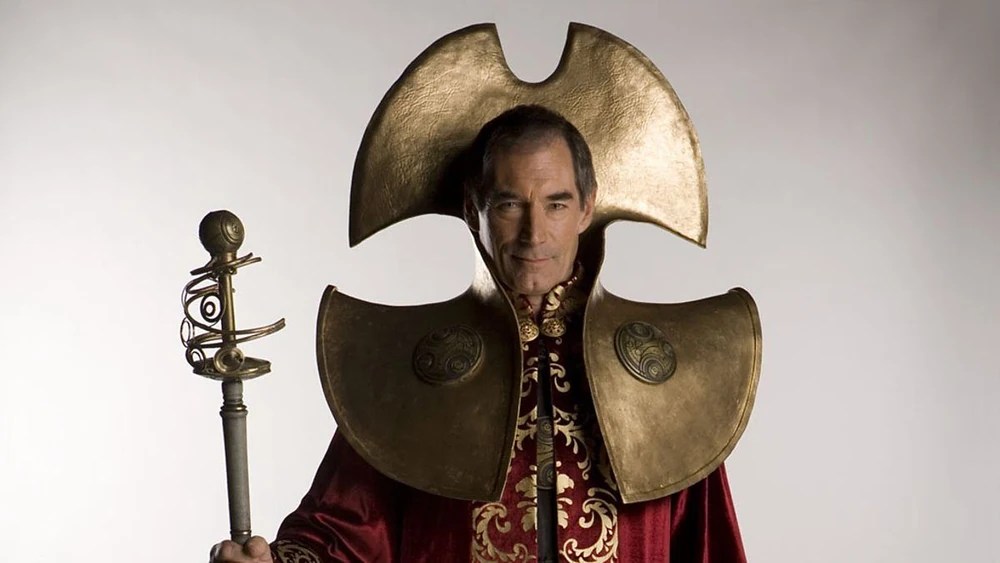
Arc’s enlightened attitude, however, is contradicted by every other visit to Gallifrey. One can be sentenced to death for murder, genocide, treason, unauthorised use of a time capsule, interference in other worlds, and conduct unbecoming a Time Lord. The High Council can also order a summary execution, though they are sufficiently dedicated to due process that a warrant must be issued with the correct wording. To be issued, it requires a simple majority vote from the Council. They also justify it by precedent; if a legal decision has already been established in another legal case, that can bind future cases in a common law system.
Overall, it’s a sad decline from the tempered justice of the Doctor’s first trial, where his defence of fighting evil was considered and the tribunal even admitted he had “raised difficult issues” when he argued that it was their indolence that was the real crime. His arguments swayed the Time Lords’ sentence, and they decided on a spot of irony in exiling him to a world where he could fight invading aliens every week.
There’s a huge shift in the format of Time Lord trials from The War Games to Trial of a Time Lord. In the former, there’s a more inquisitorial system, a from of trial system used in civil law jurisdictions, such as France. By the time of Trial, it’s shifted to the more familiar adversarial system that’s used in most common law jurisdictions like the UK and US. In an adversarial system there is, technically, little interest in the truth of a case; it’s about whether or not you can prove your case, and the judge acts as an impartial chairperson to the proceedings. In inquisitorial proceedings, the judge may act as an investigator, and have the power to question witnesses and suspects, in this role they act not as the prosecutor but as an investigator of facts. They are interested in the truth. Something akin to this is seen in The War Games, where the Time Lords present the facts of what has happened, and make their judgement based upon them, taking into account the Doctor’s defense. This court is an honest court. By the time of Trial, the Time Lords are covering up their own crimes, and cheerfully doctoring the evidence.
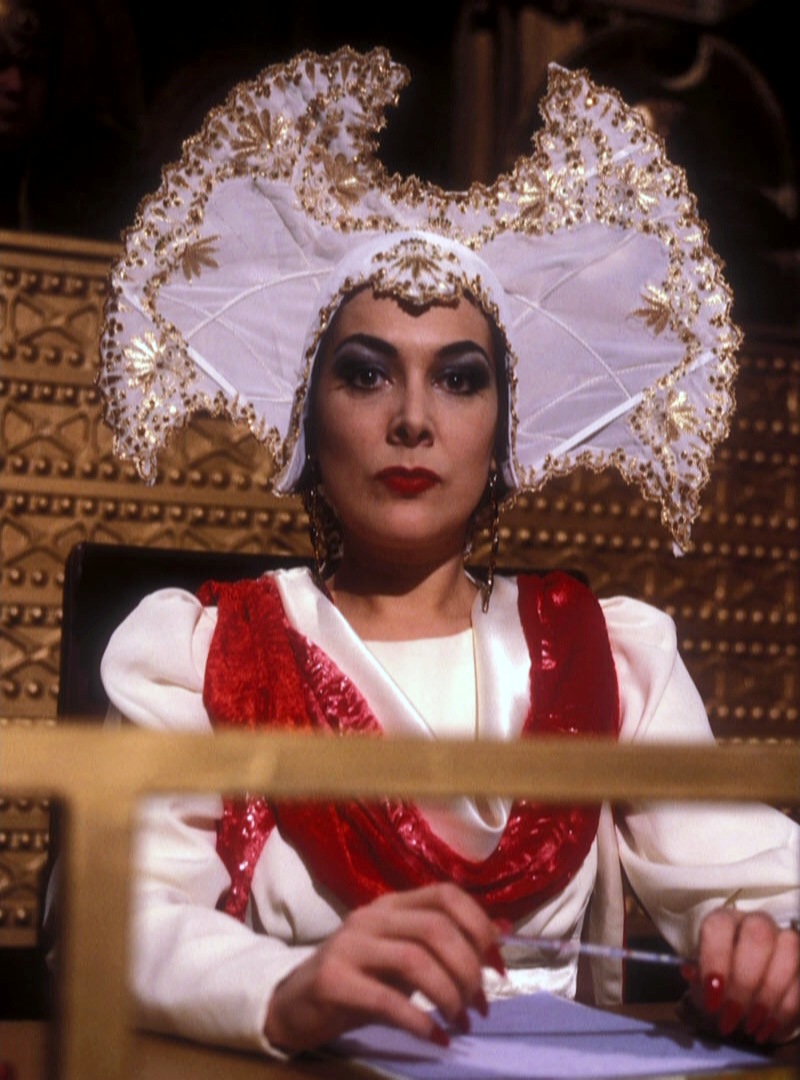
There is, however, one small aspect of jurisprudence brought up in Trial that is truly delightful: the Doctor’s disbelief that the court could consider the trial valid if both the prosecutor and accused were the same person. It’s a consideration that requires the parties to be able to move though four dimensions and, alas, instead of giving us an answer to this intriguing question, the Inquisitor insists that’s irrelevant.
Through their legal system the Time Lords are characterised as a corrupted aristocracy who will shamelessly indulge in hypocrisy, and are out of touch with the universe at large, but they want to believe they are enlightened, intellectual, and respectful of the rule of law. It’s not an unfair criticism of the United Kingdom’s political class. Even now we still have ninety hereditary peers in the House of Lords. The upper middle class dominates the Commons: we have an elected chamber where three-quarters of the MPs are millionaires. Every Prime Minister who went to university, save one, was educated at Oxford or Cambridge. Nineteen out of fifty-five have gone to Eton.
The the spirit of Gallifrey’s constitutional and criminal laws offer a distorted mirror of the United Kingdom’s contradictions in who we are and how we would like to see ourselves: law-abiding hypocrites, xenophobic interventionists, and peace-loving warmongers.”
Phew! That was longer than I remember. I;d write this a wee bit differently now, and I remember doing some edits on-the-fly as I was reading it – there’s some parts here that don’t flow brilliantly, and I did my best to correct on the spot. But I think it still mostly makes sense.
I’d love to do another one of these TARDIS Talks if I get a chance to go back to the Gallifrey One. I know I mentioned it a while ago to the track organisers, and they were not too horrified about the idea of me diving into my views on How Scotland and Scottish Culture Is Presented In Doctor Who. (There would be an excessive amount of time spent praising Terror of the Zygons. Seriously.)
Discover more from Lizbeth Myles
Subscribe to get the latest posts sent to your email.

 Lizbeth Myles
This is brilliant work! Thank you very much for sharing!