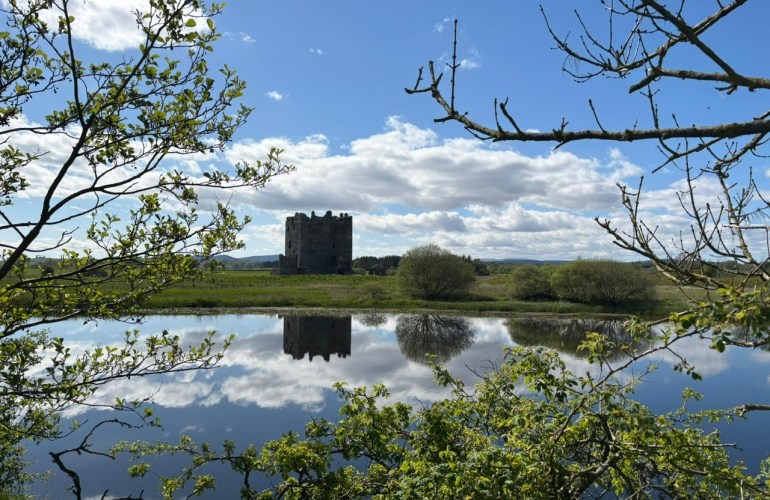
Actually, you don’t have to pay the ferryman, I think the National Trust of Scotland does (or possibly Historic Environment Scotland; one manages the castle, one owns it), but you do require the services of the ferryman in order to reach the castle.
Threave Castle is one of my local castles, perhaps my local-est, and the very first castle I ever visited. And while other castles have delighted more over the years, Threave has not yet been surpassed in the Epic Quest vibes of approaching a castle. First you must locate the car park, hidden out in the wilds of Galloway, amongst mysterious country roads where at any moment a tractor might spring out in front of you. Or a duck. (Not a joke, I was walking on the road to Threave once, and an inconsiderate duck got spooked so decided to leap out from the undergrowth and into me.)
Once this elusive car park has been located, it is time to put aside your maps and compass (for this is not the land of GPS navigation…or mobile phone signals), and set forth on the path of gravel and mud, through boggy lands, and mystical woods, and also some farm. As you follow this path for no less than half a mile, you must cross eight wooden gates. At each gate you must correctly answer a riddle, or else be trapped on the path forever! (Not true, but imagine if it was…the gates are real though.)
Finally you will see the River Dee, and you must seek the small jetty, where you will find a brass bell. Ring the bell, and the ferryman will appear. Do not fear that he will not take your gold coin, tis not a trick. But if you ask nicely you will be permitted to descend the steps to the jetty, and board his boat. He will skilfully row you (…in my head, in real life the boat has a motor) to Threave Island. Upon this scrap of isolated land, you will find the brooding remains of Threave Castle, once home to the infamous Black Douglasses. Step into the shell of this once might fortress and feel the aura of DOOOOOM that still lurks within it.
It is actually quite forbidding, especially in the right sort of weather, and standing inside the ruins, looking up to the top of the tower house, I remember feeling quite oppressed, in a way I don’t usually in castle ruins. Obviously I take this as incontrovertible evidence that the place is haunted. (I’d have to be paid a significant sum to take this journey at night.)
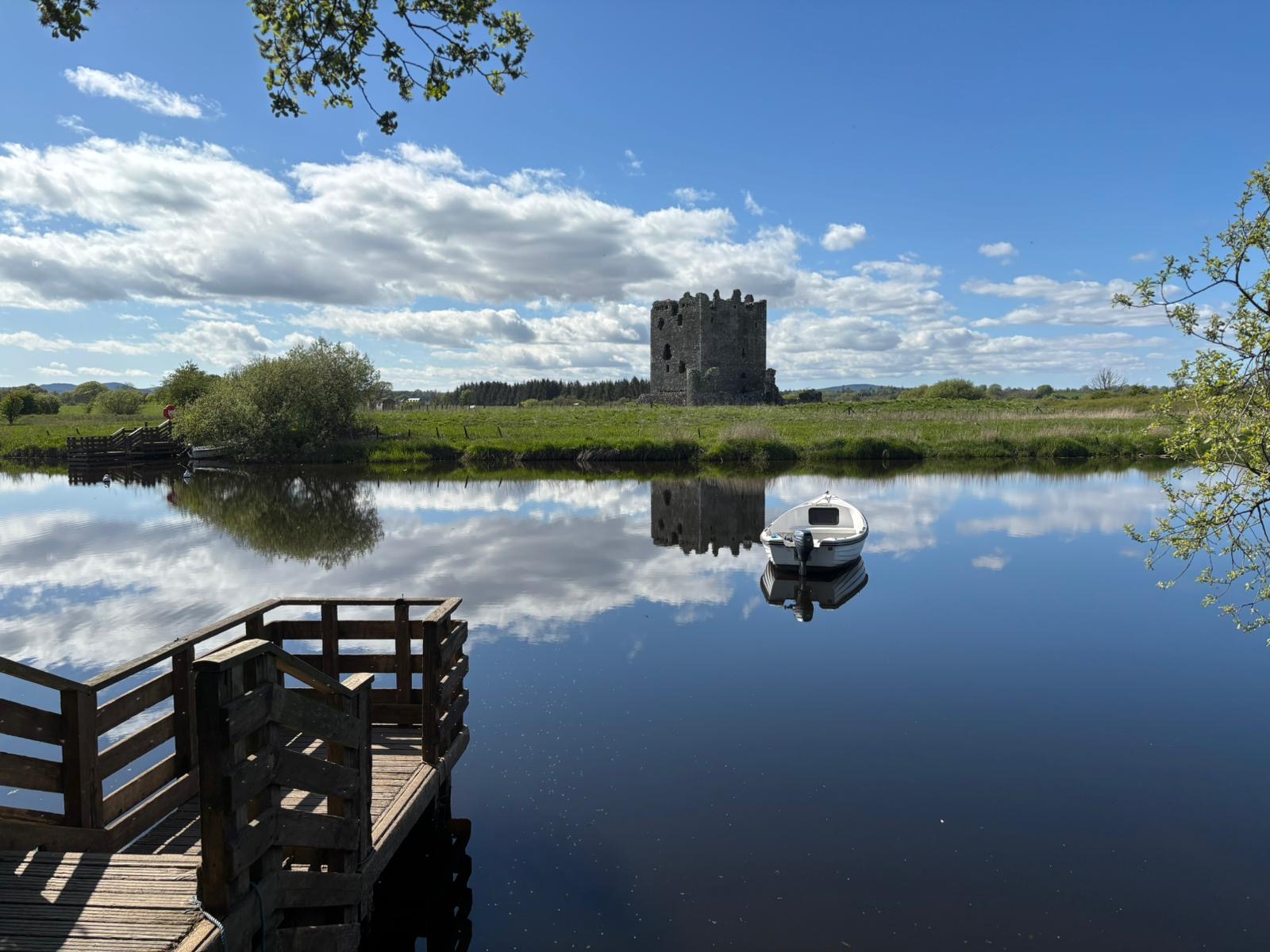
Threave Castle was built back in 1369 by Archibald the Grim (or, less delightfully, Archibald Douglas, 3rd Earl of Douglas), shortly after he became Lord of Galloway. Back in those days, Galloway was not the most co-operative of regions in Scotland. It was the last part of mainland Scotland to fall under the rule of the Scottish Crown. Prior to that it was a independent kingdom, then it was a sub-kingdom, and then finally, definitely, no longer any sort of independent political entity, by 1223.
Archibald the Grim (charmingly, his father was known as James the Good…at least north of the border; we love our epithets in Scotland. Possibly my fav is Alexander Lindsay, 4th Earl of Crawford aka the Tiger Earl, or Earl Beardie), decided he’d like a cool new base in this wild region of the country, and decided his mighty fortress would be built on the island of Threave in the middle of the River Dee. Threave Castle’s keep was over twenty metres high, and had five stories. It was one of the first tower houses built in Scotland. You can also see the remains of a gatehouse, and the curtain walls. When the castle was built, the island was a lot smaller – the river level was higher – and would have been home to a village surrounding the keep. The remains of other buildings have been found in archaeological digs, including a great hall, chapel, and a fortified harbour. There are also the ruins of the much later artillery fortifications, and gun emplacements, which allowed the castle to successfully hold out against cannon bombardments.
The family that lived there for the next hundred years, the Black Douglasses are a historical delight. Archibald got his epithet from looking tremendously scary to the English in battle. His father, Sir James Douglas (aka Good Sir James aka James the Good aka The Black Douglas, son of William Douglas the Bold, son of William Longleg…I told you we liked our epithets…) got the Black Douglas epithet, apparently, from a small incident known as the Douglas Larder, during the Wars of Independence. James was very keen on getting the English out of his castle, and when he did, he beheaded all his prisoners, and burnt their bodies on a pyre made of wine caskets, then he poisoned the castle wells with salt and dead horses. (He was, clearly, not planning on hanging around in the castle, but in leaving a message that, yes, even at the time was quite…grotesque.)
The Scots, on the other hand, called him the Good, and he was best buds with Robert the Bruce, and the one who, when Bruce was dying, asked to take his heart to the Holy Land in penance for his sins. Douglas was killed on Crusade, Bruce’s heart in a silver casket he wore around his neck.
Archibald, despite his fearful appearance in battle – and his epithet – did not appear to have done anything so grim at the Douglas Larder. He did fight the native Gallovidians, the English in Scotland (successfully), and the English in France (serving the French King, in the spirit of the Auld Alliance) where he got himself captured. But also escaped, by pretending he was a common squire, and not worth any ransom (apparently).
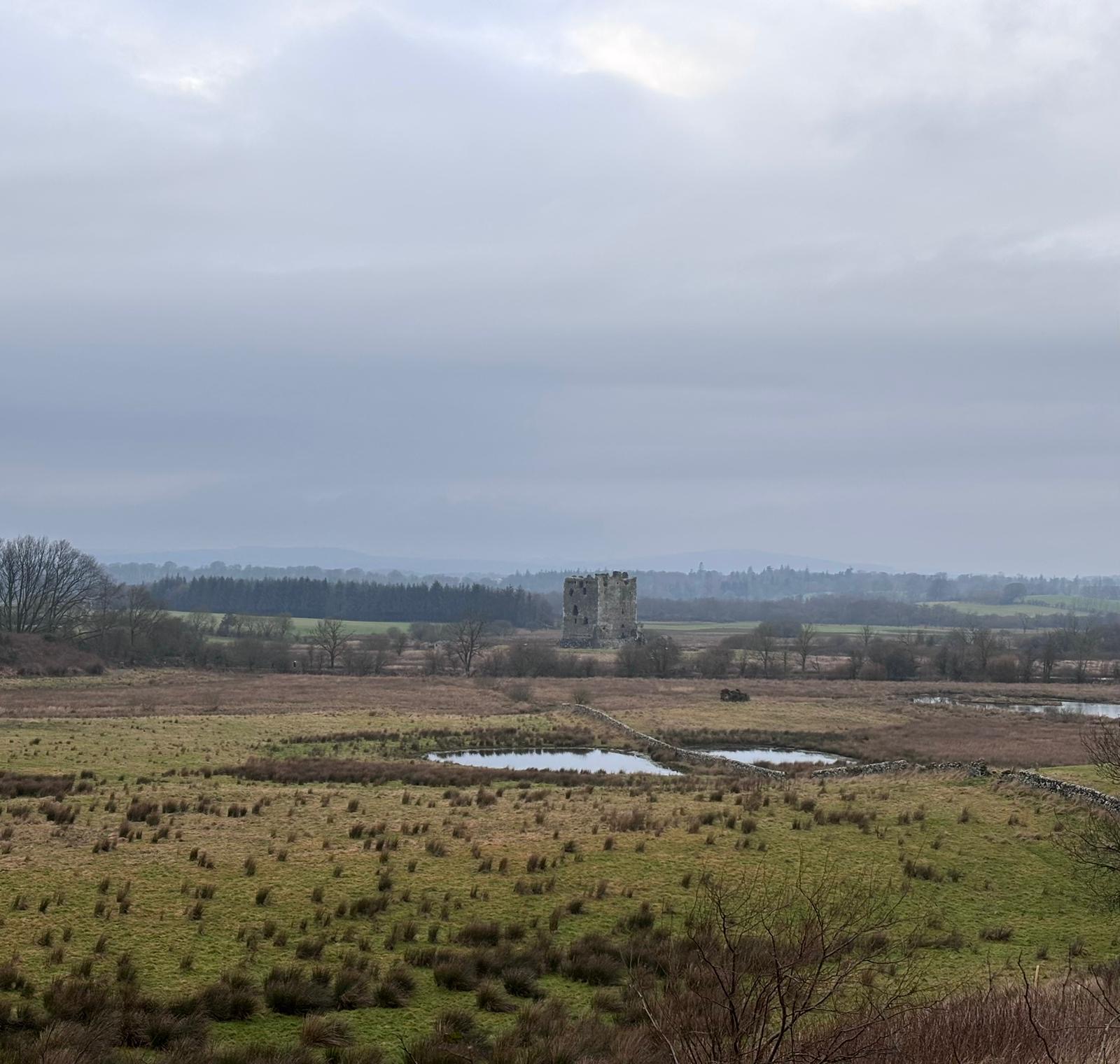
The rival to the Douglas Larder came when the sixteen year old William Douglas, 6th Earl of Douglas. inherited the title in 1439. The following year, young William, and his little brother David, were invited to Edinburgh Castle by William Crichton, Lord Chancellor, to have dinner with with James II of Scotland, then only ten years old. During the dinner a black bull’s head (a symbol of traitors) was brought in and placed before William Douglas. The two Douglas boys were then dragged out (against James’s protests), accused of treason, and summarily executed. Very curiously indeed, the man who inherited the vast, vast, Douglas lands and wealth, the boys’ great-uncle James Douglas, did sod all to avenge his family’s honour, the betrayal, the breach of trust, the cold-blooded murder of his great-nephews. HMM.
If you’re thinking “that sounds like it could be the inspiration for George RR Martin’s Red Wedding,” that’s because it was.
And in case you were worried it all worked out splendidly for James “I didn’t notice that brutal murder of my nephews, oh, look, my new castle!” Douglas, it sort of did. But his son got personally stabbed to death by James II because James wasn’t happy about his dealings with the English, or imprisoning and murdering the Sheriff or Galloway.
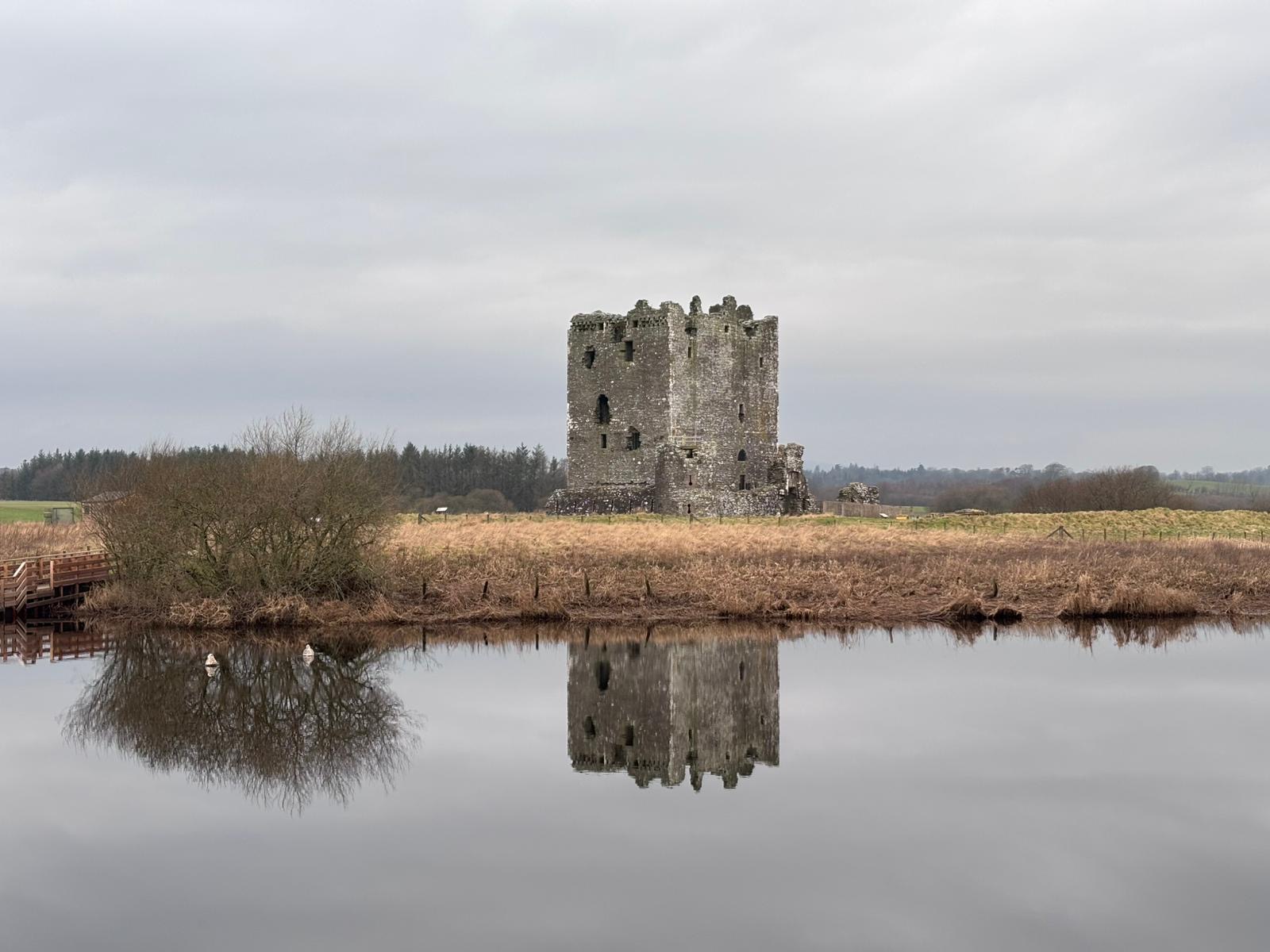
After the stabby death, another William now inherited. And finished off a fancy new artillery house (one of the first purpose-built gun defences in Britain) at Threave Castle, paid for by…Henry VI of England. No, King James II was not a happy bunny, and he systematically took down the Earl’s castles, until only Threave was left standing. But despite two months of sieging, might Threave did not fall, thanks to that fancy new artillery house. So King James bribed the garrison to surrender.
Thus ended the Black Douglasses. The lordship of Galloway was annexed to the Scottish Crown, and Threave Castle was now given over to the Maxwells to keep it in the Crown’s name. The castle came under siege again during the War of Three Kingdoms by an army of Convenantors. It held for over three months before they surrendered on the orders of King Charles I, as he was unable to send any reinforcements to assist them. The Covenantors dissembled many of the buildings, and the castle was never lived in again.
During the Napoleonic Wars, it was prepped to hold French prisoners, but there’s no evidence it was ever actuallly used for that purpose. In 1913, it was entrusted to the state, and conservation work began.
The island was not open to to public for a few years, but boat trips across returned on 2024. Access to the castle remained restricted due to masonry inspections, however I believe it’s reopening in April.
All photos taken by my brilliant sister, Kirsty Belle. (kirstybelle.bsky.social)
Discover more from Lizbeth Myles
Subscribe to get the latest posts sent to your email.

 Lizbeth Myles