Lighthouses are awesome. They are such pure buildings, all noble and humanitarian, meant to protect and guide. They are beacons of hope, literally, metaphorically. When France and Britain were at war (again) at the end of the 17th century a French privateer took engineer Henry Winstanley prisoner while he was working on the first lighthouse to be constructed on the Eddystone Rocks, near Cornwall. Louis XIV ordered his immediate release, saying “France was at war with England, not with humanity.”
Of course, these marvellous buildings get their own time of celebration: International Light Day is the third week of August, and National Lighthouse Day (in the USA anyway) is on August 7th. (It’s on that day, in 1789, that the United States Congress approved an Act for building and supporting lighthouses.) I looked this up to see if I could pretend I was writing this for a reason beyond ‘lighthouses are just really awesome and I feel like writing about them’, but no, I’ve been thwarted by the US Congress.
The proud history of these worthy buildings officially begins with the Lighthouse of Alexandria, one of the Seven Wonders of the World, constructed in 280 BCE. It stood at an incredible 110 metres tall, and for a long time it was the second tallest building on the world, dwarfed only by the Great Pyramid of Giza. Alas, an earthquake reduced it to ruins in 1323.
Further back than this the function of the lighthouse was played by beacon fires on hilltops, though in the legends of Homer he writes it was Palamedes of Nauplia, one of the Greek princes who made war on Troy, who invented the first lighthouse.
There are around 20 000 lighthouses on the planet today, every one deserving of appreciation, but which ones are the best? And by best, I mean my favourites. I confess I haven’t considered all 20 000, but as someone who enjoys a good list, I have a Top Five Lighthouse List that has been carefully considered and refined over the years. Here it is:
5 – Tourlitis Lighthouse
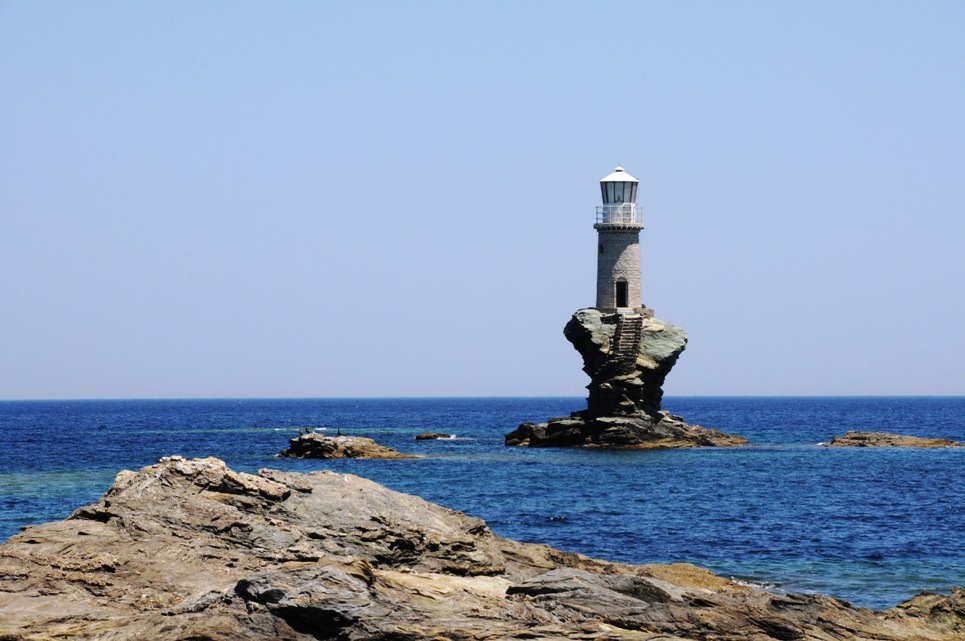
Just look at it, it’s beautiful. Magical. A lighthouse that belongs to a wizard, probably. Why are there not more lighthouses in fantasy novels? And wizard lighthouse keepers. That would be lovely.
Sadly, no wizard (that we know of) has ever lived in the Tourlitis Lighthouse. Although it is sighted in an excellent position to be part of Odysseus’s journey home (had it been around circa 1200 BCE. It wasn’t.)
This magnificent creation is situated just off the beautiful Greek island of Andros. The current lighthouse is a modern one reconstructed in 1996 after the original was destroyed in World War II. But even the original was a fairly new one, built in 1897. It stands at 7 metres tall, and when it was rebuilt it became Greece’s first automated lighthouse.
4 – Tower of Hercules
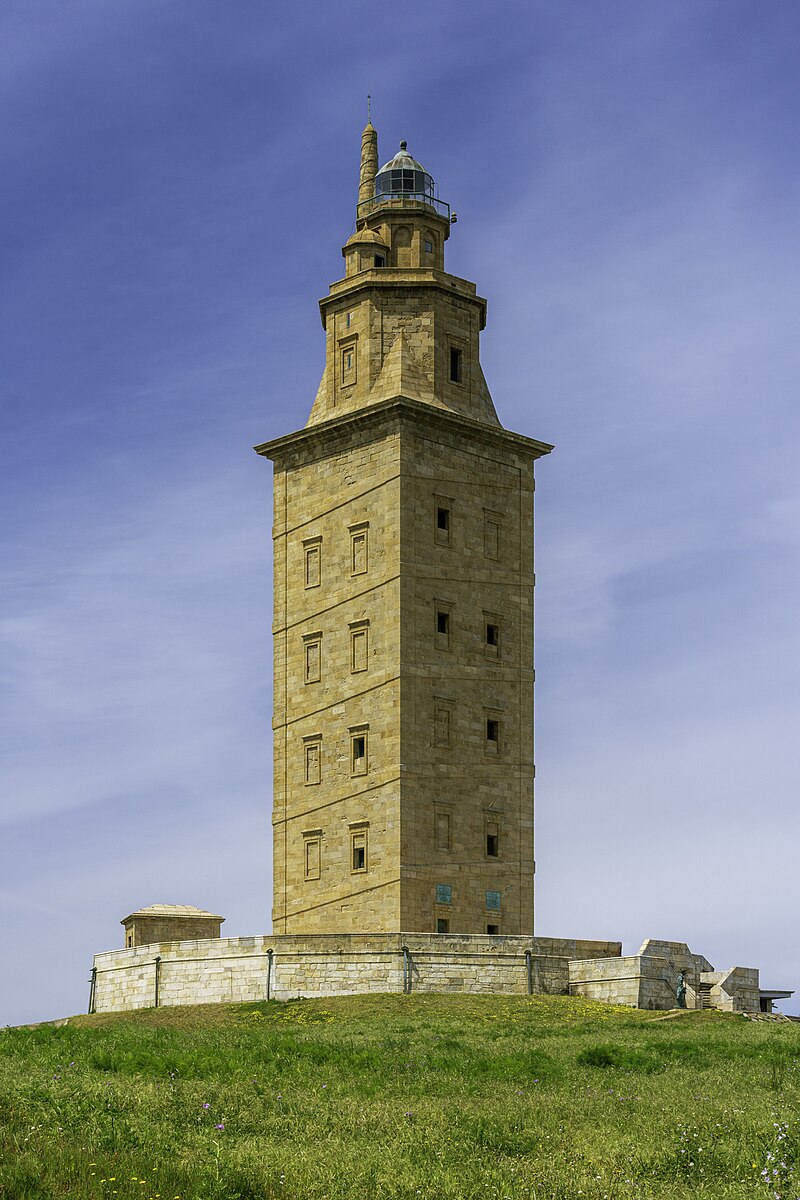
My love of the Tower of Hercules is a combo of the aesthetics, and the history.
Trajan, the second of the Five Good Emperors really like to build: roads, aqueducts, baths, harbours, a bunch of stuff names after him (Trajan’s Column, Trajan’s Forum, Trajan’s Market). And it was during this time of great civil infrastructure building that this lighthouse was built. Probably. Records are a bit spotty. The date of reconstruction may be slightly off, but on the balance of probabilities, it was during Trajan’s reign (98 – 117 CE). It was definitely built in the 1st century, or early 2nd, and has been renovated and restored over the centuries, most significantly by naval engineer Eustaquio Giannini in 1791.
It’s the oldest Roman lighthouse that survives, and the oldest operating lighthouse in the world, stands at 55 meters tall, and is located in Galicia in Spain. It became automated in 1996.
But why is it called the Tower of Hercules? Excellent question. For that we can blame King Alfonso X of Castile. He wrote a book called History of Spain that included the Very True and Historical Story of how Hercules kills the three-headed giant Geryon, buries him , and orders a lighthouse built on top of the grave to commemorate his victory. As you do.
3 – Lindau Lighthouse
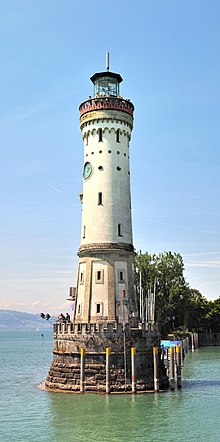
Another lighthouse whose place is earned on my list due to pure aesthetic delight. If there is a Platonically ideal lighthouse, Lindau seems a most excellent candidate. It’s just so lighthouse-y. But has these little architectural details that make it interesting while not distracting from its essential lighthouse-ishness. (There’s also a clock on the side. In case you’re at sea and need to know the time.)
Lindau Lighthouse is in the south of Germany, and stands 33 metres tall. It was completed in 1856, and has been automated since the early nineties.
2 – Lime Rock/Ida Lewis Lighthouse
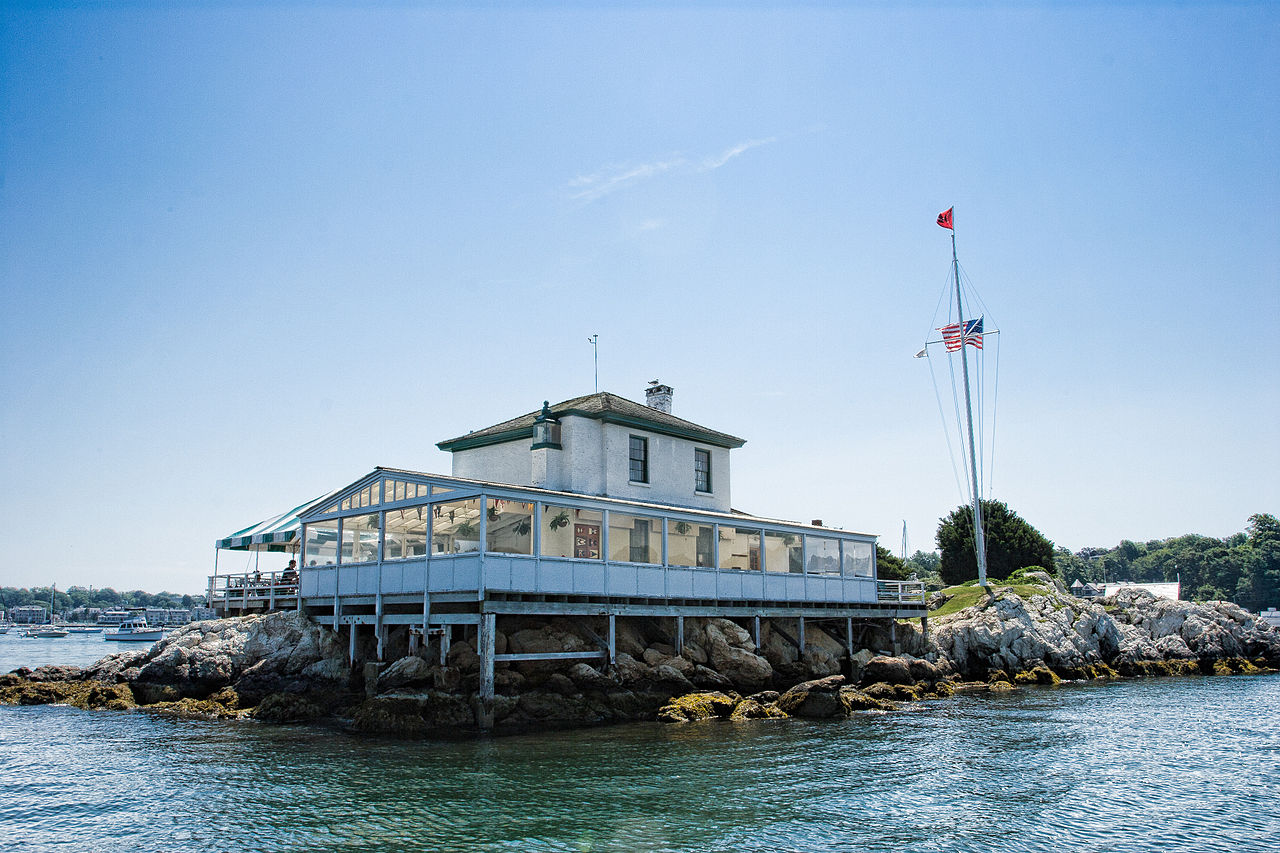
I know, I know, you look at it and think wtf? is that even a lighthouse? Yes, it is. And it’s on the list not for shallow (which are legit) aesthetic reasons, but entirely for its most excellent history. Once this was the Lime Rock Lighthouse, but in 1924 it was renamed the Ida Lewis Lighthouse.
Ida Lewis was fucking incredible. She was lighthouse keeper here for 54 years, from four months after she arrived – the official lighthouse keeper, her father, had a stroke and was unable to work – to her father’s death when her mother became official lighthouse keeper, to when she actually got the official-ness herself in 1879 (and became the highest paid lighthouse keeper in the USA), and continued on in the job until her death in 1911.
She became incredibly famous and celebrated during her lifetime for her exploits in saving lives. At 12 years old she made her first rescue, saving four men whose boat had capsized, and her final one at 63. Her most famous rescue was of two US soldiers during a snowstorm when, without coat or shoes, the 27 year old woman rowed out to save them as they clung to their capsized boat.
There’s a lovely quote from Lewis, a response to her profession being considered “un-ladylike”: “None, but a donkey, would consider it ‘un-feminine’ to save lives.”
The lighthouse itself is a modest four metres high, and was built in 1854 in Rhode Island, USA. In became automated in 1927.
1 – Bell Rock Lighthouse

My very favourite lighthouse! And it’s not just because it’s Scottish. There are a lot of Scottish lighthouses (208, including the Isle of Man, which is not Scotland, so it’s slightly less than 208…but they’re all operated by the Northern Lighthouse Board…I’m glad you asked…) This one is actually Turner’s fault. First I saw the painting (above), then I learned the name of the painting, then I looked up the lighthouse, and it’s a really beautiful lighthouse and a Scottish lighthouse but also has some incredible history.
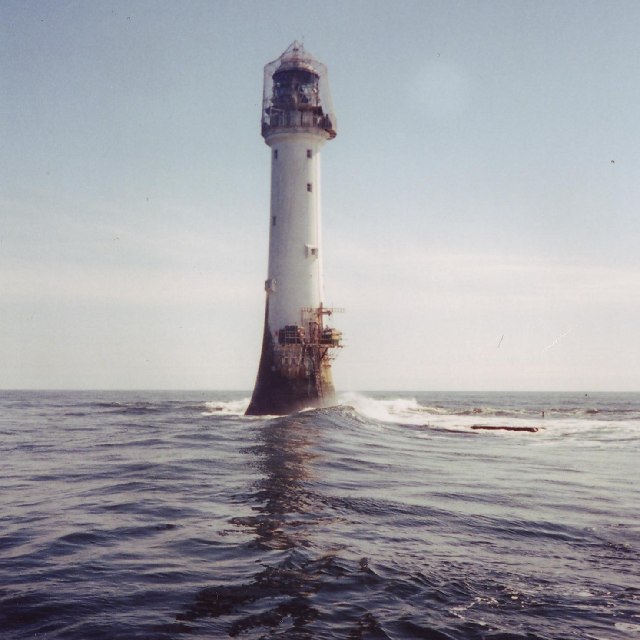
Why did some genius decide to build a lighthouse in the middle of the sea? Excellent question. The reef upon which the lighthouse is built was a serious hazard to shipping routes in the North Sea. It’s located just under the water, and only visible for a few hours a day at low tide. Its serrated rocks managed to wreck half a dozen or so ships every winter.
But it would have cost far too much to build a lighthouse there so no-one bothered until a ship of the Royal Navy hit it, and then it was suddenly very important indeed to fix the problem. (While it appals me that it only became a priority after a military ship hit it, the sinking of the HMS Victory was also a horrific tragedy. All 496 aboard perished.)
And so a plan was made to build a lighthouse on a rock that was underwater twenty-two hours a day, eleven miles from the Scottish mainland. There were, as you might imagine, one or two tiny problems with this plan.
Luckily, the brilliant lighthouse engineer Robert Stevenson (not Robert Louis Stevenson, which I’m mentioning as I was momentarily confused before remembering that Robert and Stevenson are not exactly uncommon names) was available and he had some top notch ideas. It took him a while to work them out though, and a year just to find someone brave/foolish enough to take him out to the rock so he could see what he was dealing with.
His work was passed to another pioneering engineer, John Rennie. who, despite not being a lighthouse engineer, was put in charge of the project. The two did not get along, (neither did their descendants, who were at odds on how much each man contributed to the design) but while we know both contributed to the design (though history does not tell us for certain how much), it was Stevenson who built it. He was the one out with the workers on the rock, the one intimately involved with the construction process, the one devastated by the crippling injuries his men suffered, and the two tragic deaths.
Work was slow – Stevenson insisted on no gunpowder for fear it would damager the rock, so it was pickaxes for all. And they could only work in summer, and then only for the two hours a day that the rock was above sea level. After two years of work the lighthouse was less then two metres tall.
But once the foundations were done, things sped up. And four years, the lighthouse was built, and it was built magnificently. It’s now over 200 years old and despite being pummelled by the ferocious North Sea waves on a daily basis, in that time it’s required no repairs. I’m not saying it’s the finest lighthouse ever built, but it’s definitely regarded as *one* of the finest lighthouses ever built. There’s no way to know how many lives this great building has saved, but since its construction there have been only two ships lost to those rocks. The first, HMS Argyll, was during a wartime blackout in 1915, and the second was the cargo vessel Rosecraig in 1908. On both ships, no lives were lost.
Bell Rock Lighthouse is located in the North Sea, 11 miles from Arbroath. It stands 30 metres tall and became automated in 1988.
Discover more from Lizbeth Myles
Subscribe to get the latest posts sent to your email.

 Lizbeth Myles
You missed the most interesting thing about Lindau – it’s on a lake, not the sea, which must make it very unusual.
This was great. Thank you!
1810 wasn’t the Victorian period…
Whoops! Thank you for correction.