At the end of April, my latest Big Finish audio drama was released: A Crucible of Queens, a Sixth Doctor adventure. It’s part of a boxset where an older Peri and Turlough return to travel with the Doctor. I love it when the companions coming back after the end of their telly adventures. It gives such a breath of fresh air to the characters, and real space for character development and unexpected journeys when one doesn’t know how they end their time with the Doctor. Plus they’ve years more of their own experience to draw on – Peri as the Queen of a planet, and Turlough’s involvement in the politics of his homeworld, Trion.

I pitch a lot of pure historical stories – they all focus on parts of history I adore, and feel are far too obscure – so it’s a real treat when one is accepted, and I get to engage in both my love of history and of Doctor Who. A Crucible of Queens opens in France, immediately post-Agincourt, and takes one or two liberties with history while also trying to stay faithful to the overall shape.
The hardest part, actually probably the hardest thing I’ve ever written, was the scene with Charles VI of France. There’s a heart-breaking arc to his life: in his younger years he was known as Charles the Beloved; by the end of his reign he was Charles the Mad. Perhaps the thing best-known about him today is that he was the French king who believed he was made of glass.
It’s impossible to diagnose an illness from six centuries ago, but it’s a reasonable hypotheses that Charles suffered from schizophrenia. In the story, Isabeau asks the Doctor to cure him. And that was an extremely difficult scene to write. I thought it was important, both plot-wise, for the Doctor gain Isabeau’s trust, and to show more of the challenges Isabeau faced. But handling serious mental illness, especially in a historical context with a character present who might very well know how to cure it, is a pretty delicate thing. Mostly, writing it, I thought about my aunt, who suffered from it, and who died too young.
Possibly that’s too serious a note for a post about a Doctor Who adventure, but short as the moment is, it was terribly important to me.
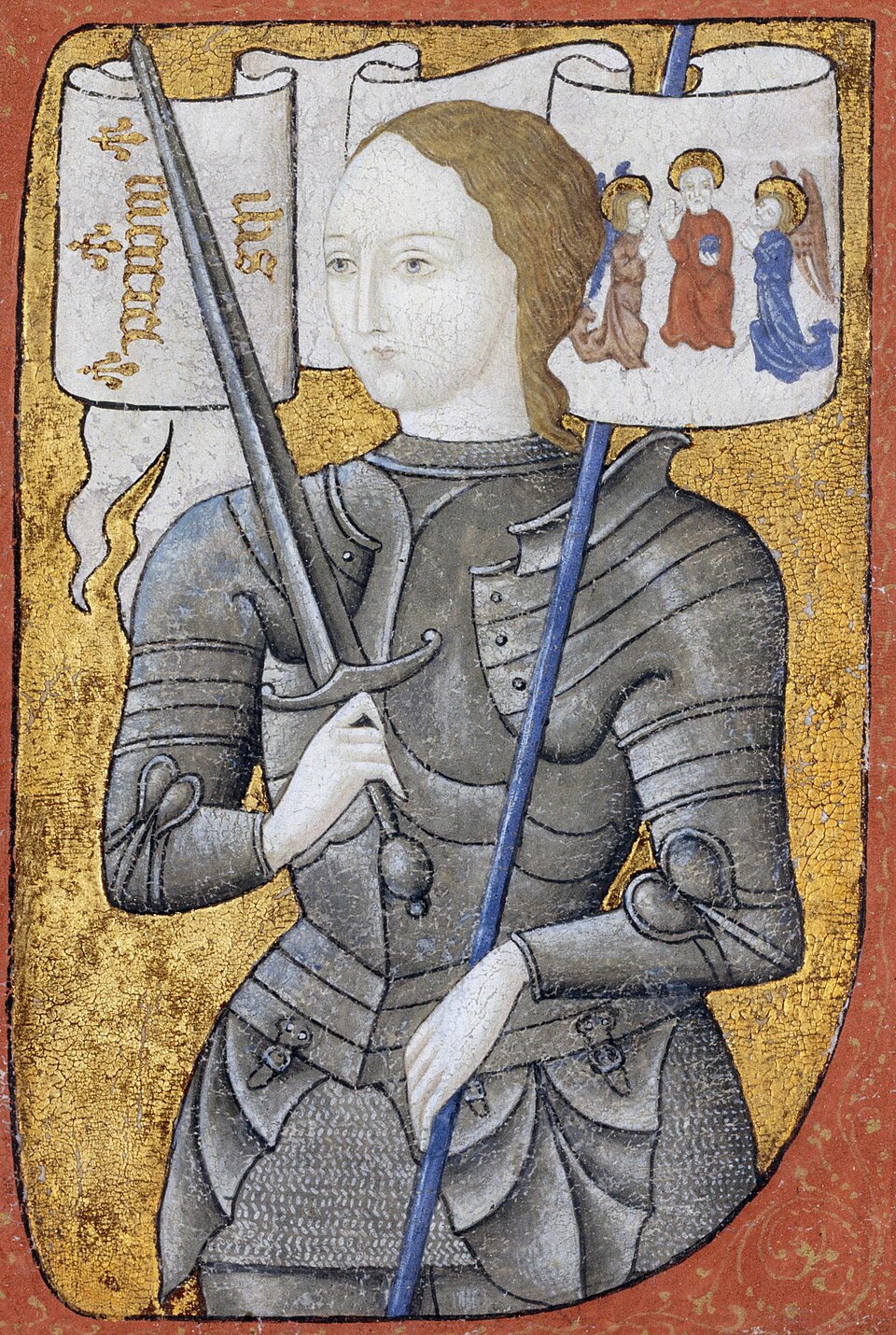
I assume most people know about the Battle of Agincourt, one of England’s greatest triumphs in the Hundred Years’ War – when the vastly outnumbered English army annihilated the French. I also assume most people know about Joan of Arc, who led French forces to the victories that culminated in Charles VII being coronated King of France. (About seven years after the death of his father, Charles VI.)
But there are some fourteen years between Agincourt and Joan’s arrival at the French court. And those years tend to be forgotten by history, dwarfed by the massive tentpole events on either side. The Battle of Agincourt (in my amateur historical opinion, apologies to any actual scholars reading this and rolling their eyes should I say something foolish) was a symptom rather than the cause of the disarray the French were in. Yes, the English were vastly outnumbered and they had their magic longbows, but the French lacked anyone who knew what the dickens they were doing to lead their army. For there was a bit of a civil war going on, which was also a really murderous family squabble.
One of the central participants was the Queen of France – and the second Queen in this crucible – Isabeau of Bavaria, who very much wanted peace. That’s my overwhelming impression, anyway: she tried to work for an end to the civil war and an end to the war with England, even though that peace might be very costly to France. And she had a huge amount of influence in the period, as Charles VI was unaware of reality, most of the time. History was, for a very long time, extremely unkind to this very politically active, very powerful woman, as it so often is. But recently she’s been see in a far more interesting light
“We have not nurtured and cherished this one for you to make him die like his brothers or to go mad like his father, or to become English like you. I keep him for my own. Come and take him away, if you dare.”
Yolande of Aragon, in a letter to Isabeau of Bavaria
Another of the great figures of this period is Yolande of Aragon, also known as the Queen of Four Kingdoms. She was the Dauphin’s greatest supporter, and eventually his mother-in-law. She’s the one who kept his cause alive, who provided the political savvy, and the money, required to keep the French fighting. She was also a great supporter of Joan of Arc. There’s a ridiculous period where every time Yolande isn’t present at the Dauphin’s court, someone makes a very stupid decision that sets back his cause. And she’s the one who has to sort the mess out when she gets back. And she does. Every time. (Apologies for lack of details, much of this I’m writing from memory, but I highly recommend further reading on Yolande.)
Well, if you got this far, thank you for reading a bit of a history ramble. Writing-wise, there was a huge challenge in the complexity of the people involved, the shifting political alliances, and who’d just assassinated who and why. And when one writes a historical piece of fiction, there are constant choices to be made about what to keep, what to expand on, or glide over, or ignore. Because history can be viewed from so many angles (cf changing opinions over the centuries about Queen Isabeau), and is far from objective. Everything is always more complicated than it looks at first, and it can be quite overwhelming. I hope my choices here have done the period and the people some justice. And throwing the Doctor, Peri, and Turlough into this delicious political mess and having them survive it was a great deal of fun.
A Crucible of Queens is available now on the Big Finish website as part of a Sixth Doctor Boxset.
If you fancy taking a browse through the rest of my Big Finish work, there’s a handy author page here.
Discover more from Lizbeth Myles
Subscribe to get the latest posts sent to your email.

 Lizbeth Myles